
You want a sump pump plan that fits Rochester’s old foundations and spring melt. This article helps you compare practical options, spot tradeoffs, and pick steps that protect a basement without overspending.
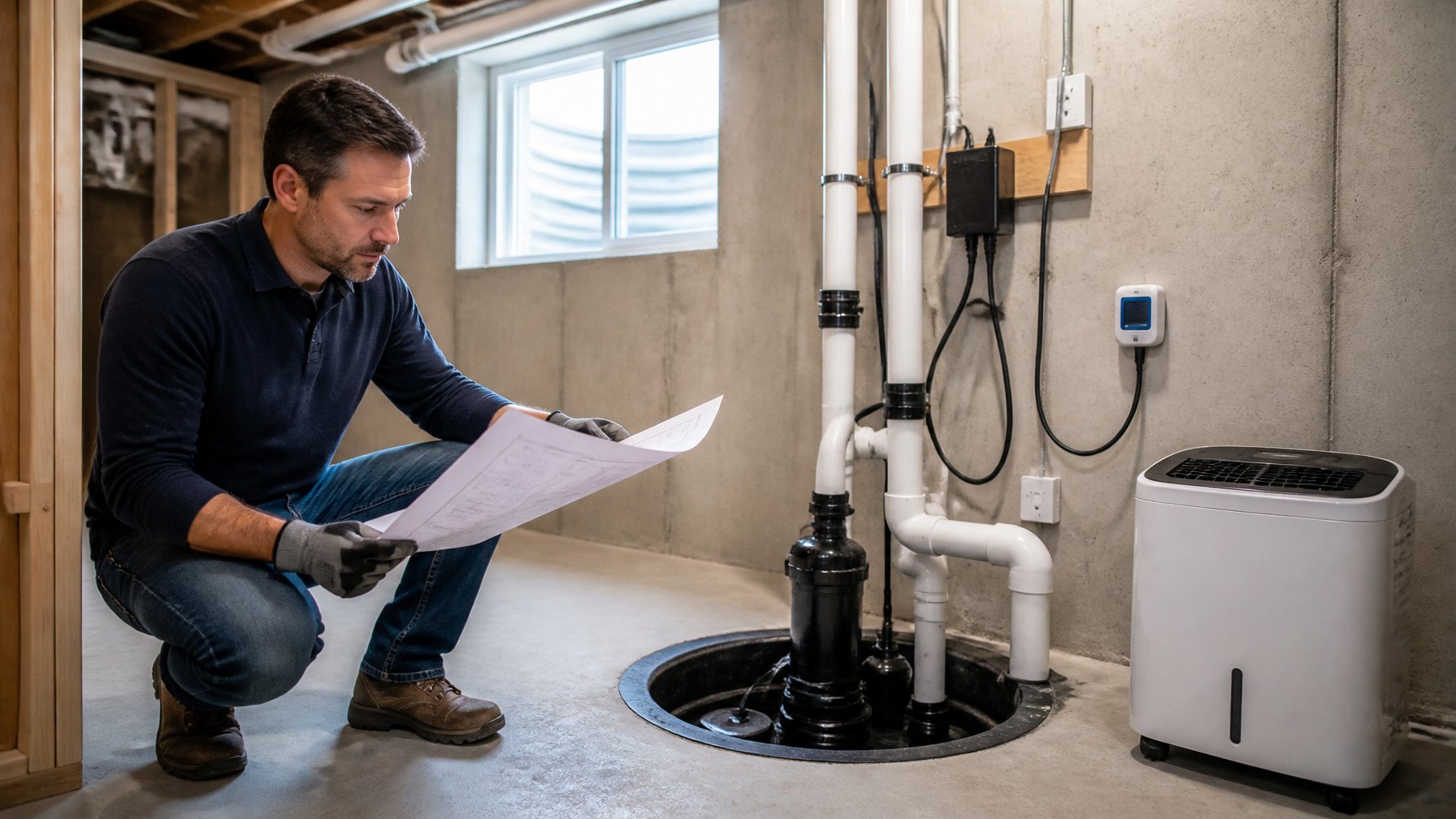
You will learn which upgrades matter most, what questions to ask installers, and how to balance cost, reliability, and ease of maintenance. The article covers battery backups, smart switches, dedicated circuits, routed discharge, alarm floats, easier pit access, redundant pumps, and yearly maintenance so you can choose the right mix for your home.
1) Install battery backup system (e.g., Basement Watchdog Pro)
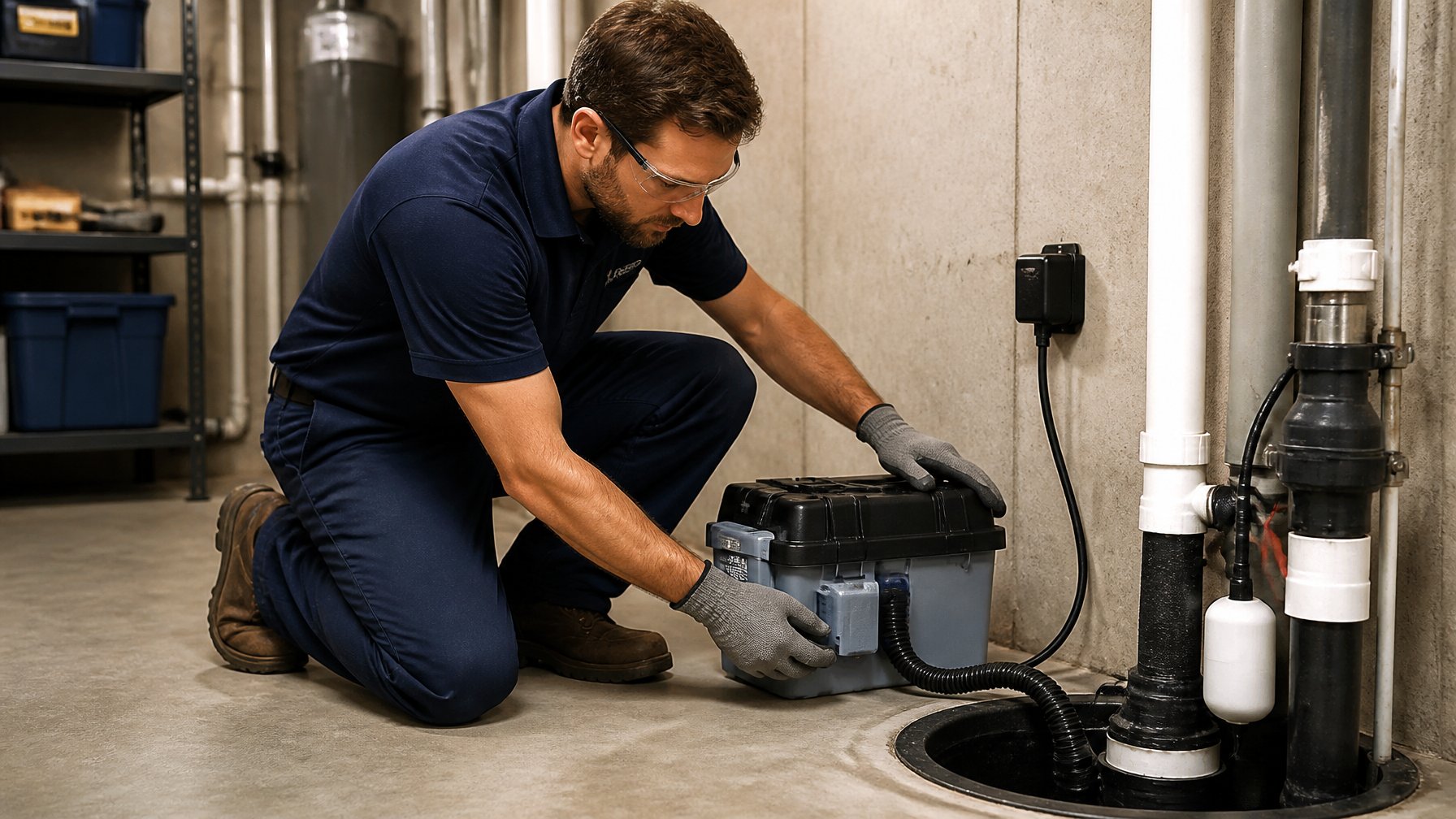
A battery backup keeps a sump pump running during power outages common in storms. Homeowners should compare battery capacity (amp-hours), run time at typical pump draw, and recharge speed to match their flood risk.
Ask about automatic switchover and low-battery alarms so the system starts without intervention. Tradeoffs include higher cost for longer run time versus smaller units that need quick utility power restoration.
They should also check compatibility with the existing pump and float switch type. For more installation guidance and service options, visit the homepage.
Choose sealed, maintenance-free batteries and plan a yearly test to ensure reliability. Realistic photos of a pump and backup unit help visual planning for placement and ventilation.
2) Add a Wi‑Fi-enabled smart sump pump switch (e.g., Zoeller Guardian)
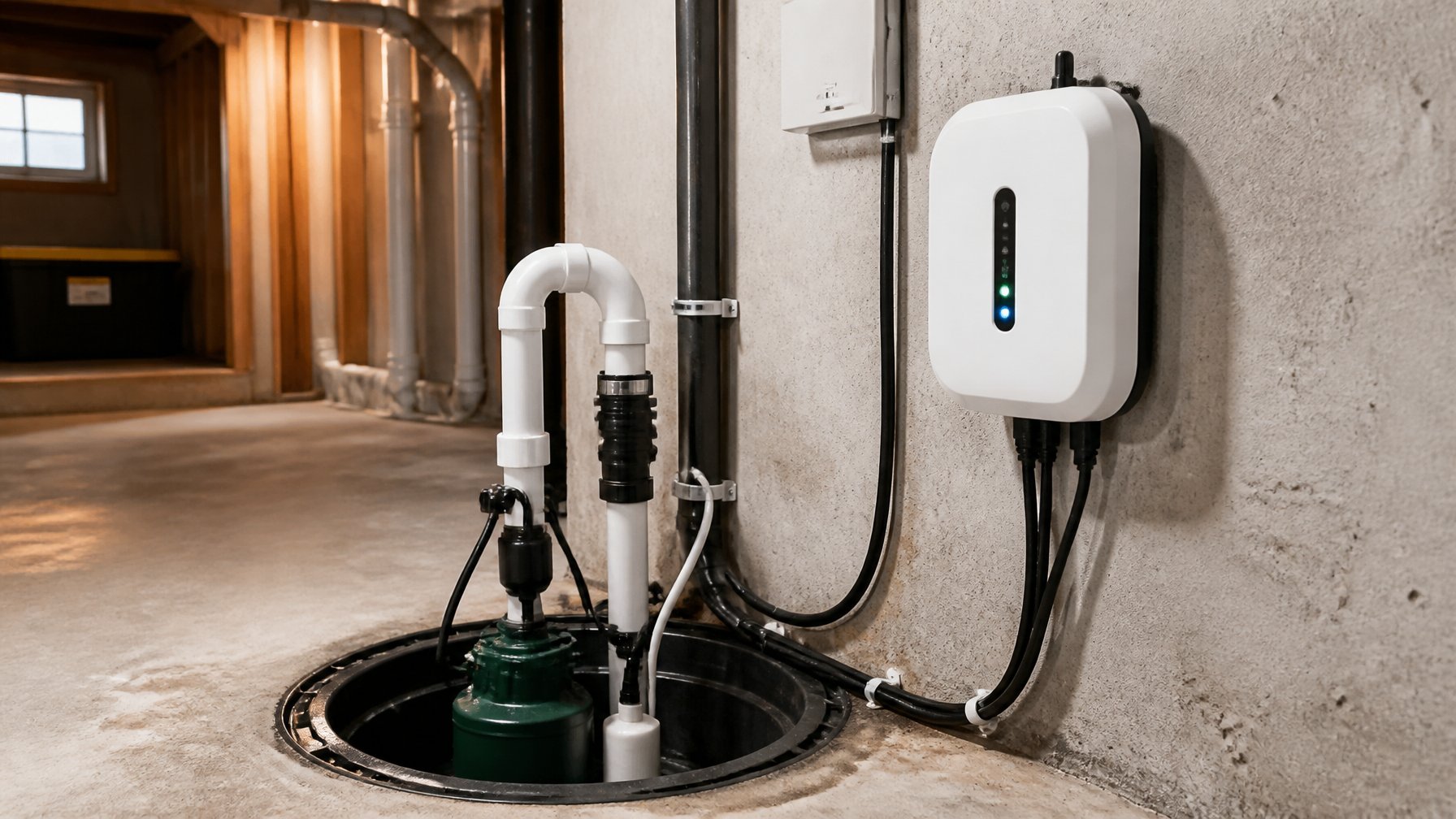
A smart sump pump switch sends alerts and lets owners check pump status from a phone. Compare battery backup options, sensor types, and app features. Ask if the device supports local Wi‑Fi and cellular fallback for outages.
They should weigh cost versus peace of mind. More features mean higher price and more setup. Homeowners can link to a local service page for installation help or system checks.
Installers should place the sensor where it sees high water but stays clear of debris. Confirm the switch works with the existing pump model and electrical setup. Test alerts and manual override after installation.
3) Plan dedicated GFCI-protected circuit for sump pump
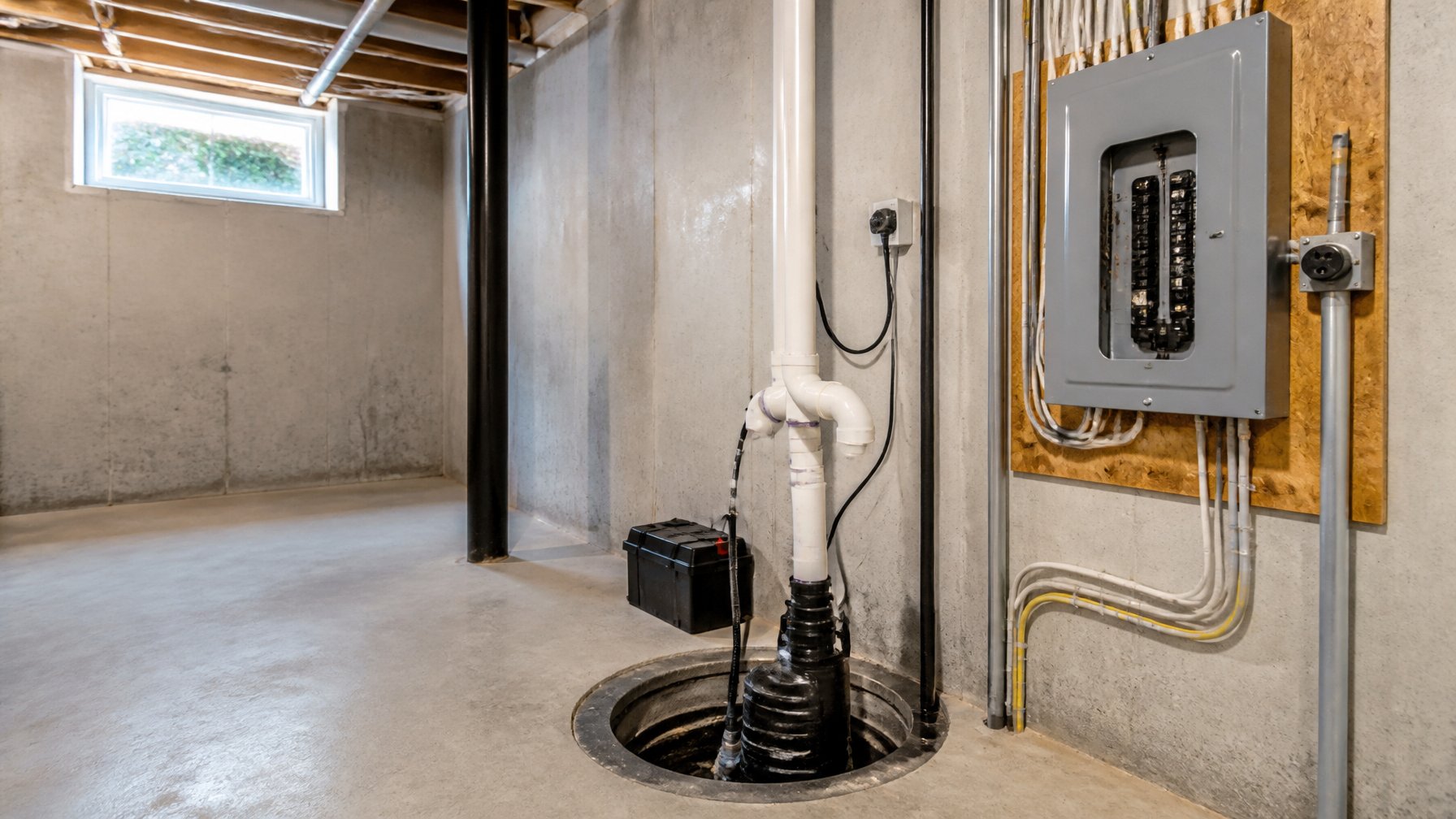
They should install a dedicated electrical circuit just for the sump pump to avoid tripping breakers when other appliances run. Homeowners should compare single-outlet circuits versus small dual-outlet setups and ask an electrician about the correct breaker size and wire gauge for the pump’s amperage.
They should require a GFCI outlet or GFCI breaker to reduce shock risk in wet basements. Ask whether a GFCI outlet or a GFCI breaker is better for the panel location, and weigh reset convenience against panel access.
They should check battery backup and alarm connections before wiring. Confirm how the backup system will tie into the circuit and ask about space in the panel for an extra breaker. See sump pump services for more details.
4) Design routed discharge to street with check valve and splash block
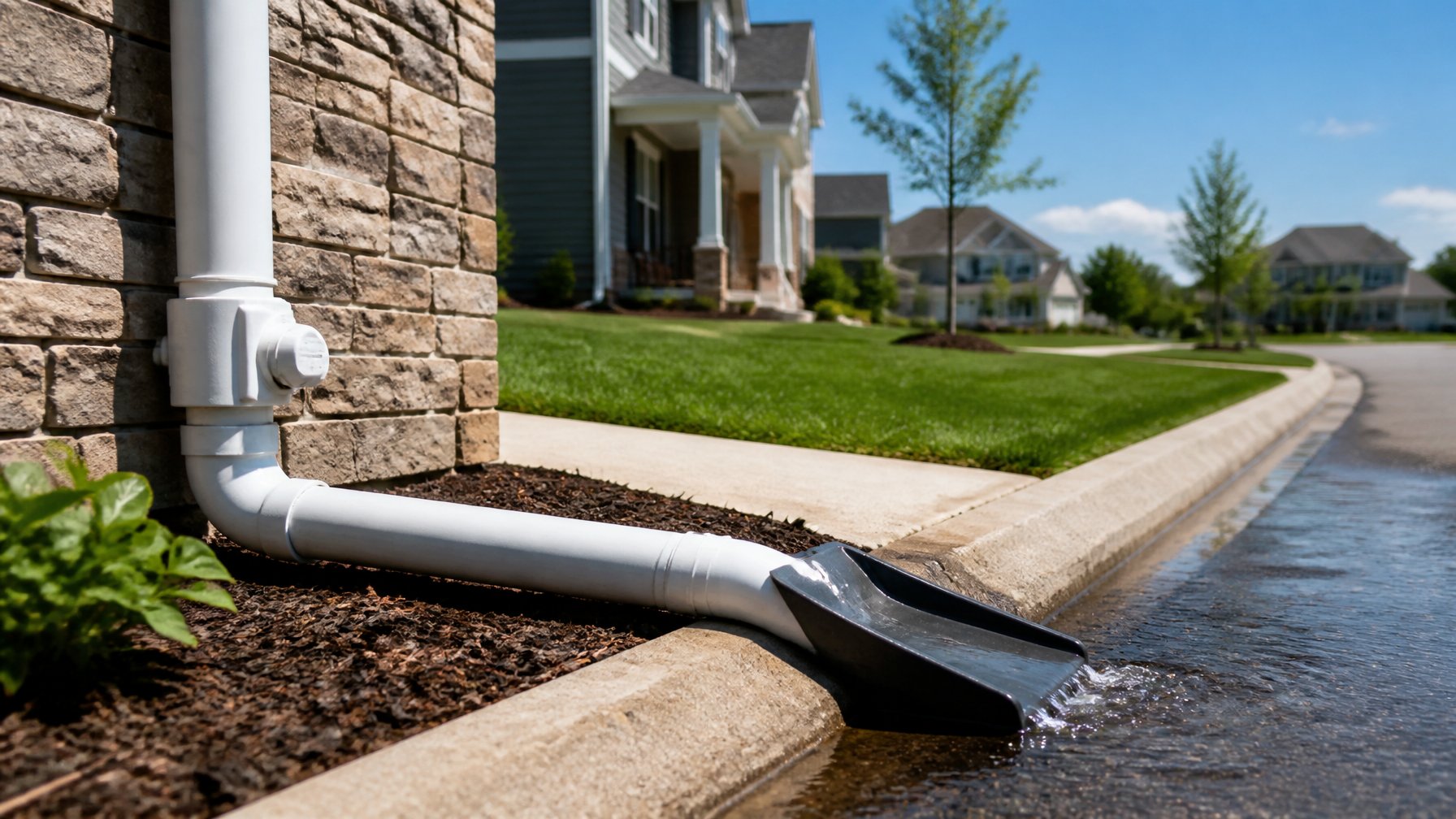
They should plan the discharge pipe so water flows away from the house and into the street without crossing sidewalks. Compare rigid PVC vs. flexible hose for durability and slope; ask which meets city code and which resists freezing. Factor cost, ease of installation, and long-term maintenance.
They should include a check valve to stop sewer or street water from backing into the sump line. Ask about valve type, location, and how often it needs testing or replacement. Trade off price versus leak risk and accessibility for service.
They should end the pipe with a splash block or curb outlet that spreads water and prevents erosion. Compare splash block sizes and materials, and ask about permits for tying into storm drains. For more guidance, see basement waterproofing and sump pump services.
5) Include a separate alarm float switch (e.g., High‑Water Alarm)
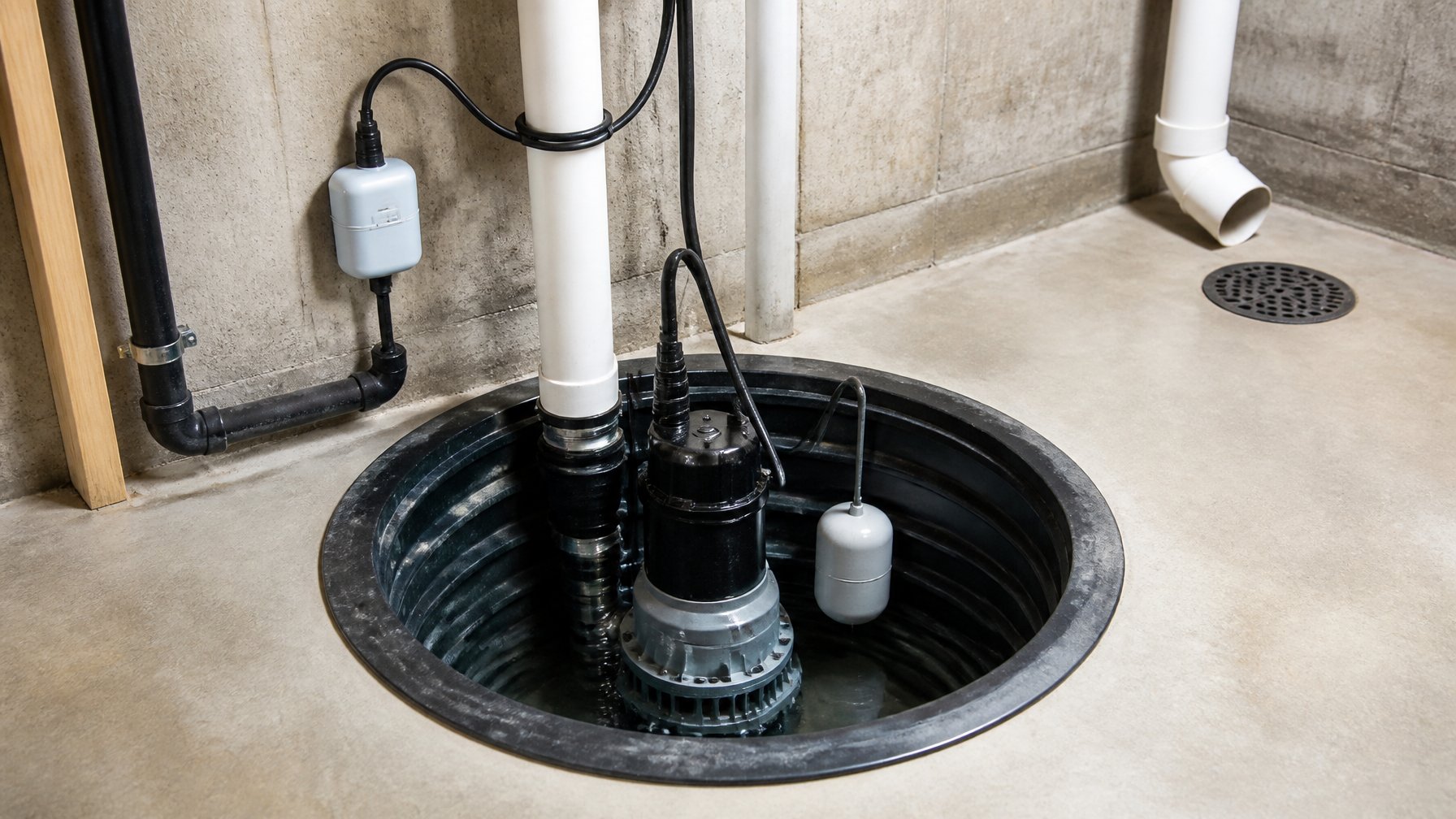
A separate alarm float switch warns when the pit water rises too high. Homeowners should compare battery-backed models and wired ones, and ask about battery life and test procedures.
They should check if the alarm has a loud horn and visual light, and if it can connect to a smart alert system. The tradeoff is cost versus peace of mind; battery units work during outages but need replacement more often.
Ask the installer where the alarm will mount so it stays above splashing but senses true high water. Consider linking the alarm to a backup pump or an alert service for extra protection.
See the homepage for more basement protection options.
6) Create accessible sump pit with removable cover and LED light
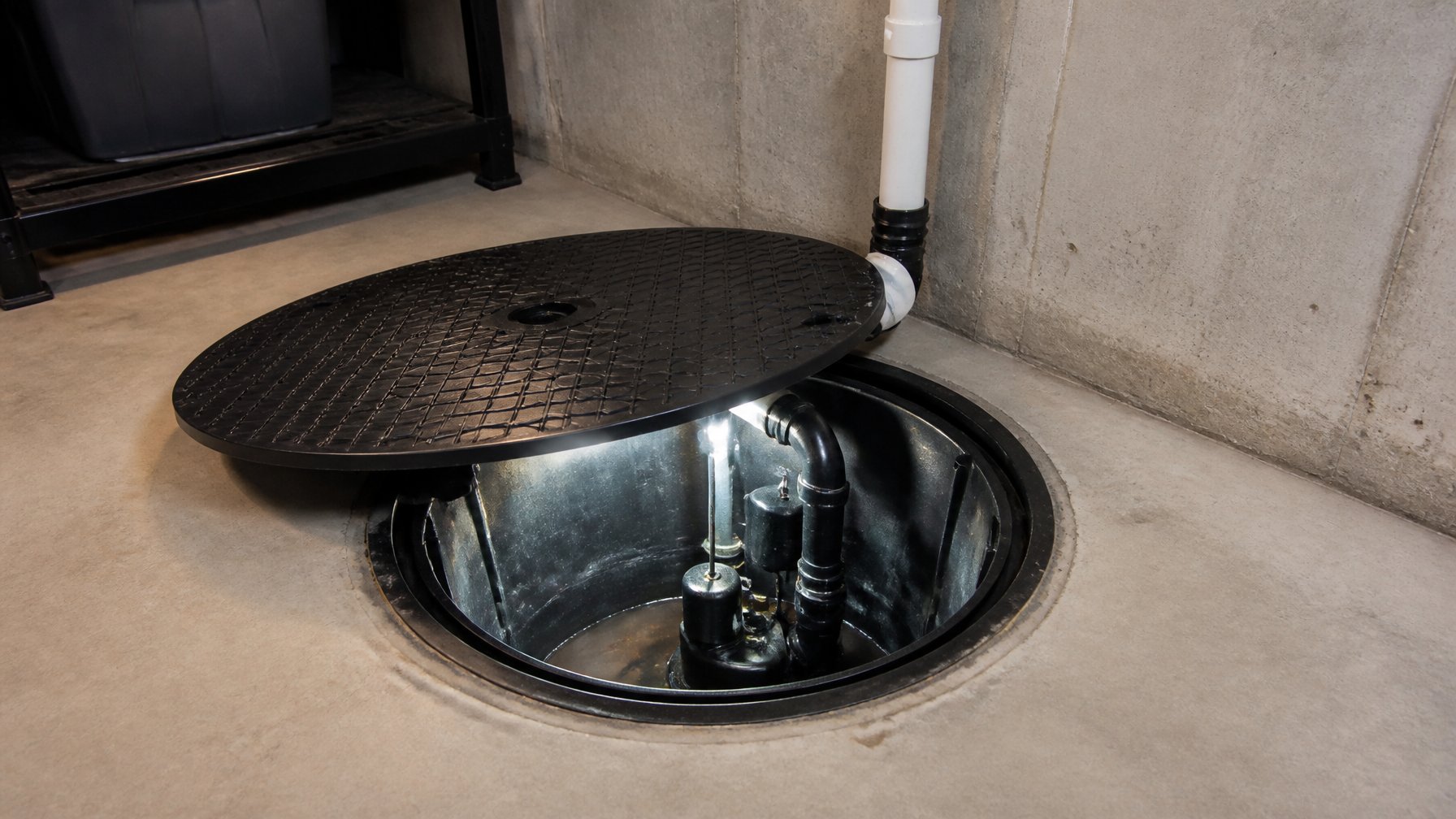
They should choose a removable cover that fits tightly but lifts off easily for maintenance. Compare plastic vs. cast-iron covers for weight, cost, and sealing; ask about gasketed options to reduce odors and radon.
Install a battery-backed LED light inside or near the pit for safe, hands-free work. Decide between built-in LEDs or a magnetic, removable lamp; trade off permanence for ease of replacement.
Make the pit rim flush with the floor and add a small inspection hatch nearby for quick checks. Homeowners should measure clearance needs for pumps and float switches and confirm the cover clears those parts.
For guidance on compatible pump sizes and installation services, visit the homepage.
7) Install a secondary pedestal pump for redundancy
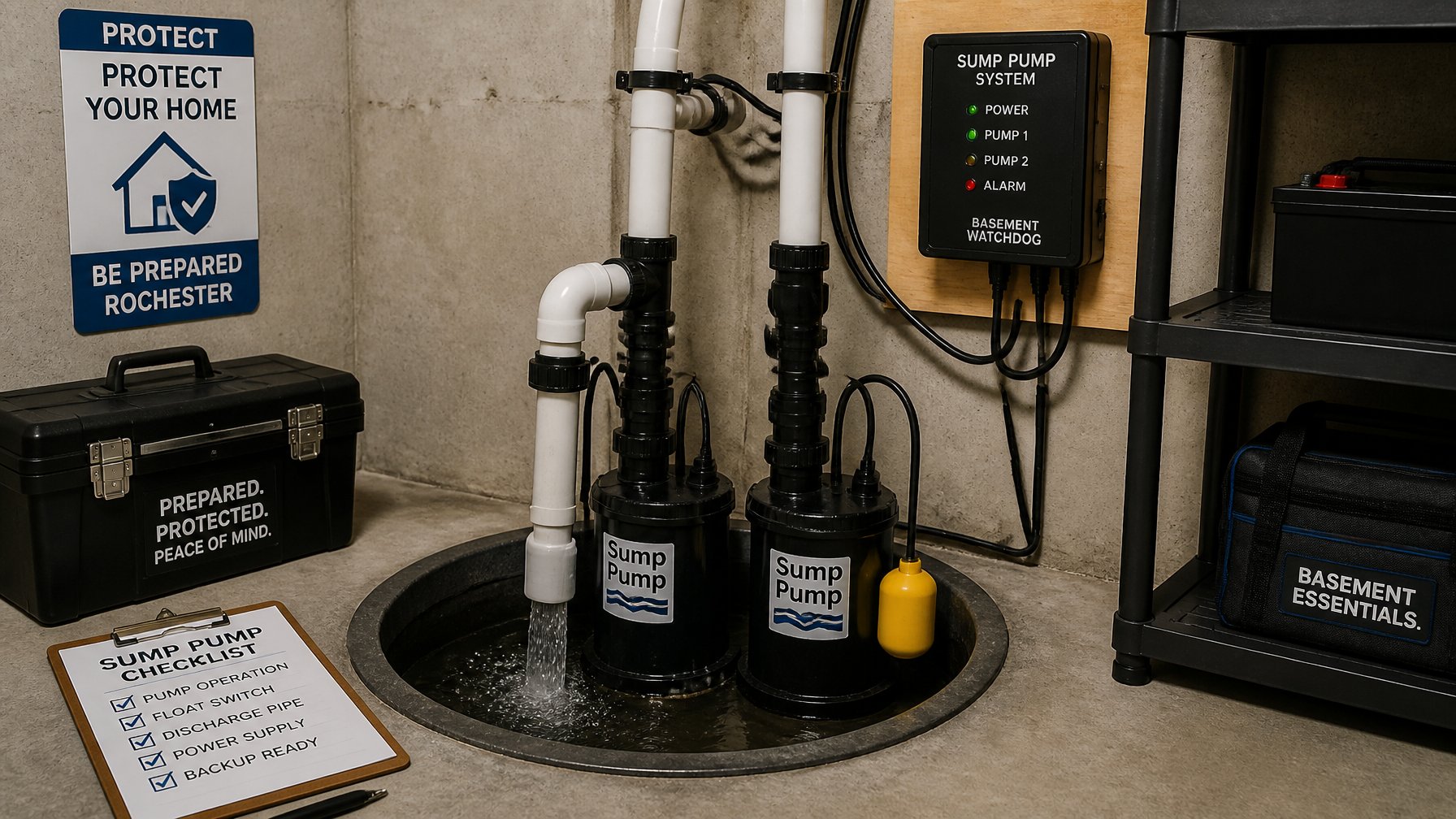
They should install a secondary pedestal pump beside the primary sump. Compare pump capacity (GPM), switch type, and power source so the backup can handle peak flow if the main pump fails.
Ask whether the backup uses a float switch or electronic switch and if it has a battery or water-powered backup option. The tradeoff is cost versus reliability: battery backups add expense but keep the pump working during outages.
They should check discharge line size and valve arrangement so both pumps can run without backflow. Have the installer tie the secondary pump into the same pit and test both pumps together during heavy flow.
For more guidance on system types and pros and cons, see Sump Pump Installation.
8) Schedule annual maintenance checklist with local plumber contact
They should set one yearly date with a local plumber to inspect the pump, check the float switch, and test the backup system. Ask what the service covers, how long it takes, and whether filters or parts are extra.
Homeowners should compare prices, warranties, and response times between two or three plumbers. Ask for a written checklist and whether the plumber will run a full pump test and clear the discharge line.
They should confirm emergency visit fees and average arrival times during storms. Discuss tradeoffs: lower price versus faster emergency response or longer warranty.
Include a reminder to save the plumber’s contact in a visible place and on the phone. For related services and scheduling, see homepage.